
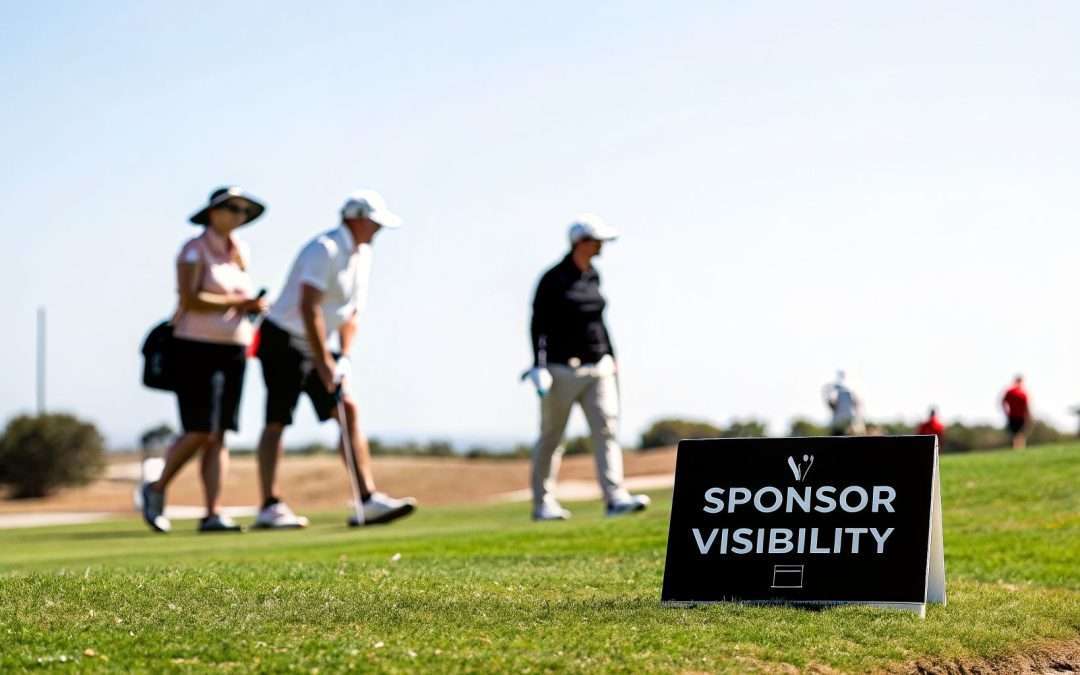
When you're running a charity golf tournament, every detail matters. The sun might be shining and the players having a great time, but your sponsors need to feel like they're getting real value. That's where professional, eye-catching golf sponsor hole signs come in. They’re much more than just markers on a tee box—they're one of the most effective ways to generate revenue and give your sponsors direct, unfiltered access to a captive audience.
Why Golf Sponsor Hole Signs Are Essential
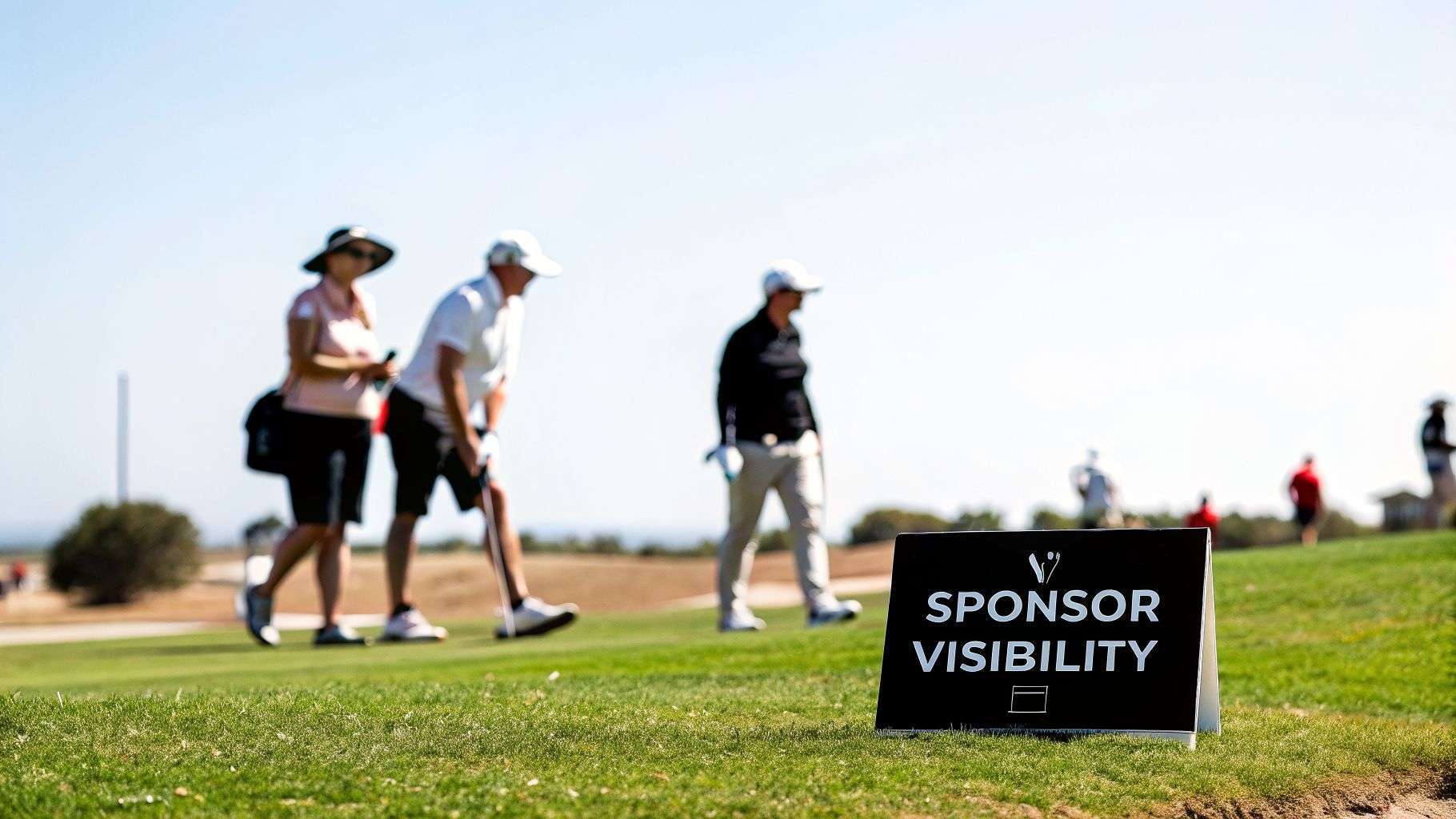
Think of your hole signs as miniature billboards, perfectly placed along the course. For the four to five hours it takes to play a round, golfers are in a relaxed, receptive frame of mind. They aren't scrolling past ads; they’re actively engaging with their surroundings. This makes on-course signage a surprisingly powerful tool. Unlike a digital ad that vanishes in a second, a physical sign creates a real brand presence that becomes part of the player's experience.
This guide is designed to help you get it right. We'll cover everything from picking the right materials to designing signs that actually get noticed, turning a simple round of golf into a fantastic marketing opportunity for your partners.
A Powerful Alternative to Digital Ads
We’re all tired of digital ad overload. That’s what makes physical, place-based advertising so refreshing. A player might glance at a web banner for a couple of seconds, but they'll see a well-placed hole sign for several minutes while they wait to tee off, plan their shot, and walk to their ball.
That extended exposure really works. Studies on on-course sponsorship effectiveness show that this kind of signage can boost a sponsor's brand recall by as much as 65% compared to typical online ads. Golfers are simply more open to brand messages when they're out on the course.
That’s why these signs are such a cornerstone of any good tournament sponsorship package. They provide direct, tangible exposure that sponsors can see and appreciate, making it easy to prove the value of their investment.
First Steps: Understanding Your Options
Before you start thinking about logos and colors, you need to know what your options are. The type of sign you choose affects your budget, the overall look and feel of your event, and even whether you can reuse them next year. Let’s take a look at the most common choices.
Hole Sign Options at a Glance
This table gives a quick summary of the common sign types, materials, and where each one shines.
| Attribute | Budget (Coroplast) | Standard (Aluminum) | Premium (Custom Shapes) |
|---|---|---|---|
| Material | Corrugated plastic | Aluminum composite (e.g., Dibond) | PVC, acrylic, or other custom materials |
| Durability | Lower (best for 1-2 uses) | High (reusable for years) | Very High (designed for longevity) |
| Best For | Tight budgets, one-off events | Annual tournaments, professional look | Top-tier sponsors, unique branding |
| Cost | $ | $$ | $$$ |
Coroplast is your go-to for saving money, while aluminum offers a great balance of professionalism and reusability. For your title sponsors or to make a huge impression, custom shapes are the way to go. Your choice really just depends on your budget and how you want to position your event.
Choosing the Right Materials and Sizes
Picking the right material for your golf sponsor signs is a lot like choosing the right club for a tricky shot—your decision has a huge impact on the final result. It affects how your event looks and feels, what it costs, and whether you can reuse the signs next year.
Let’s be honest, a flimsy, weather-beaten sign doesn't exactly scream "premium sponsorship." A sturdy, professional-looking one, on the other hand, shows your sponsors you value their contribution.
Common Sign Materials Compared
You'll generally run into three main options for sign materials. Each one strikes a different balance between cost, toughness, and visual pop, so knowing the trade-offs is key to making a smart call.
Corrugated Plastic (Coroplast) is what most people think of for budget-friendly signage. It's incredibly lightweight and cheap, which makes it a solid choice for a one-and-done event or if you're working with a really tight budget. The big catch? It's not built to last. These signs can easily bend, crease, or fade, and you'll likely be tossing them after a single tournament.
PVC (Polyvinyl Chloride) is a nice step up in quality. These signs are more rigid and have a smooth, non-glare finish that makes logos look sharp and professional. While they hold up much better than Coroplast, PVC can get brittle and crack in extreme hot or cold weather, or if they get knocked around too much during setup and takedown.
Aluminum Composite (Dibond) is the undisputed champion for premium, reusable signs. This stuff is made of two thin aluminum sheets sandwiching a solid plastic core. The result is an incredibly strong sign that’s completely weatherproof and won't fade in the sun. It costs more upfront, but its durability makes it a fantastic investment for annual events.
For any tournament organizer planning an annual event, aluminum composite signs deliver the best long-term value. Their ability to withstand sun, rain, and wind means you can store and reuse them for years, significantly lowering your per-event signage cost and ensuring a consistently professional presentation.
Selecting the Right Sign Dimensions
Once you've landed on a material, it's time to think about size. The dimensions you choose should really depend on the sponsor's level of contribution and where you plan to put the sign on the course.
-
Standard Hole Sponsors: The industry standard is 24×18 inches. It’s the perfect size—big enough to be seen clearly from the tee box but not so large that it gets in the way. This gives you plenty of room for the sponsor's logo, the hole number, and any tournament branding.
-
Premier or Title Sponsors: You'll want to give your top-tier sponsors more visibility to thank them for their support. For them, think bigger. Go with a 24×30 inches sign or even a small banner. Placing these larger signs in high-traffic spots, like near the clubhouse or at special contest holes (longest drive, closest to the pin), really maximizes their impact.
By matching the material and size to your sponsors and budget, you create a sponsorship program that looks polished and effective. For a deeper dive, take a look at our complete guide on choosing the best material for outdoor signs to make sure your investment holds up.
Designing Signs That Capture Attention
Let's be honest, your sponsor signs aren't just there to look pretty. They're competing for attention with the game itself, the beautiful scenery, and the conversations happening in every foursome. To make a real impact, a sign’s design needs to be sharp, simple, and instantly understood from a distance.
Think of it like a highway billboard. You only have a few seconds to get the message across to people speeding by. It’s the same on the golf course. Players will give a sign a quick glance as they line up their shot, so the golden rule is “less is more.” A cluttered sign packed with text, multiple phone numbers, or a busy graphic just gets ignored. A clean design with one clear logo and name always wins.
Balancing Logos and Legibility
The whole point is to give your sponsors great visibility, and that starts with their logo. A blurry, pixelated logo looks unprofessional and reflects poorly on everyone. This is non-negotiable: always get vector files (formats like .AI, .EPS, or .SVG) from your sponsors. They can be scaled to any size without losing a drop of quality.
Next up is the font. You need something bold and clean that someone can easily read from across the tee box. Stay away from skinny, scripty, or overly decorative fonts—they just turn into a blur from far away. The sponsor’s name should always be the biggest, most prominent piece of text on the sign.
A high-contrast color scheme is an absolute must for outdoor signs. You can't go wrong with the classics: black on white, white on dark blue, or bright yellow on black. These combinations create a sharp visual punch that makes text and logos stand out, even in the glare of the midday sun.
As we covered earlier, the material you choose plays a big role in your budget and how you can reuse the signs. This chart breaks it down simply.
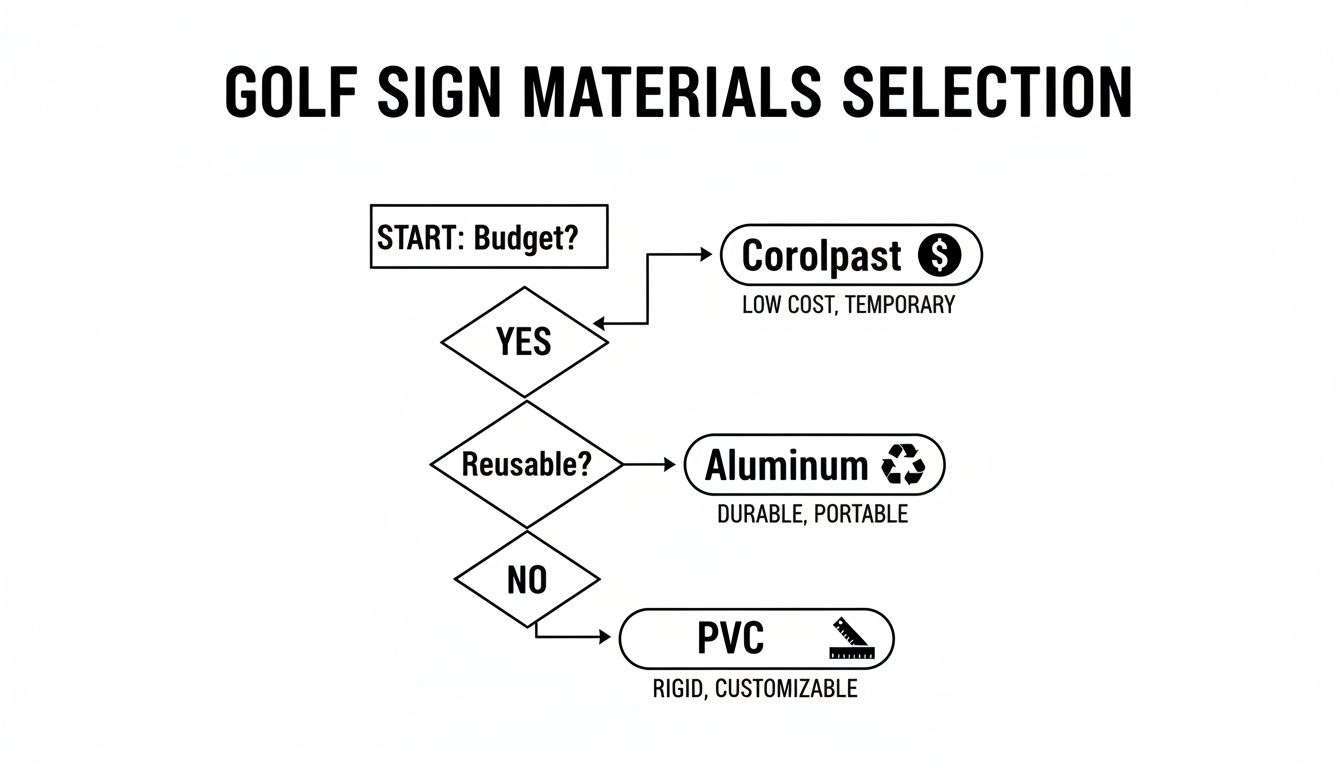
The takeaway here is straightforward: durable aluminum is the smart investment for annual events, while Coroplast is a perfectly good choice when you're working with a tighter budget for a one-off tournament.
Doubling Exposure with Smart Design
Here’s a simple trick I’ve used for years to give sponsors way more bang for their buck: double-sided printing. It's a small upgrade in cost, but it instantly doubles the sign's visibility. Players see it as they approach the tee, and they see it again as they walk or drive off toward the fairway.
Finally, tie everything together by incorporating your tournament's own branding into the design. Create a consistent template that features the event logo and color scheme on every single sign. It’s a professional touch that makes the whole course look polished and shows your sponsors they are true partners in your event. If you’re curious about what makes outdoor visuals last, you can find more tips in our guide to weatherproof outdoor wall art.
Pricing Sponsorships and Planning Your Order
This is where your tournament's profitability is really decided. How you price your sponsorships and plan your sign order can make or break your budget.
I like to think of sponsorship tiers like the trim levels on a new car. The basic hole sponsorship is your dependable base model, while a title sponsorship is the fully-loaded luxury version. Each one is designed to appeal to a different kind of buyer with a different budget. Your job is to create clear, compelling packages that make it an easy "yes" for businesses looking to get involved.
For many tournaments, the simple hole sponsorship is the bread and butter. It's often the entry point for brand-new partners and, on its own, can be a huge source of revenue.
Industry data shows that hole sponsorships, typically priced between $300 and $1,000, are the first step for around 70% of new sponsors. Some of the most successful organizers I've seen even sell multiple sponsorships per hole, which can pull in $10,000 or more across an 18-hole course. You can dig deeper into the history and financial side of these signs with insights on tee sign evolution.
Structuring Your Sponsorship Tiers
Building out your packages is about more than just putting a logo on a sign. You need to think about the total value you're offering the sponsor at each level.
- Title Sponsor (Highest Tier): This partner gets the star treatment. Think top billing everywhere—the biggest signs, their logo on all your marketing, shout-outs during announcements. Their investment is the highest, but so is the visibility.
- Hole Sponsor (Mid-Tier): This is the classic. It gets them a professionally printed golf sponsor hole sign right at a tee box. It's fantastic on-course exposure for a really accessible price.
- Cart or Contest Sponsor (Value-Add Tier): These are great because they attach a brand to a specific, memorable part of the day. Sponsoring the beverage cart, a longest-drive contest, or the putting green gives them a unique way to stand out beyond a static sign.
Don't just stop at the basics. You can really sweeten the deal by exploring other golf outing sponsorship ideas and bundling them into your packages. Tossing in a few social media mentions alongside the physical sign can make your offerings much more attractive.
Checklist for Planning Your Sign Order
Once you've got your sponsorship levels mapped out, it's time to get your signs ordered. A little planning here goes a long way in avoiding any last-minute headaches.
- Get a Headcount: Do a firm count of every sign you need for each sponsorship tier. Remember to include signs for the registration desk, directional arrows, and special contests. It’s always smart to order a few blank extras for emergencies.
- Gather the Goods: You'll need to collect high-resolution vector logos (AI, EPS, or SVG files) from every single sponsor. This is non-negotiable if you want their branding to look sharp and professional instead of blurry and pixelated.
- Mind the Clock: Check with your sign company on their production and shipping timelines. To be safe, plan to get your final order in at least four to six weeks before the tournament. This will help you sidestep rush fees and stressful shipping delays.
- Think Long-Term: As you're budgeting, don't just look at the upfront cost. Those cheap Coroplast signs might save you a few bucks now, but they almost never make it through more than one event. Investing a bit more in durable aluminum composite signs means you can use them for years, which dramatically lowers your annual costs and keeps your tournament looking professional year after year.
Placing Signs for Maximum Sponsor Visibility
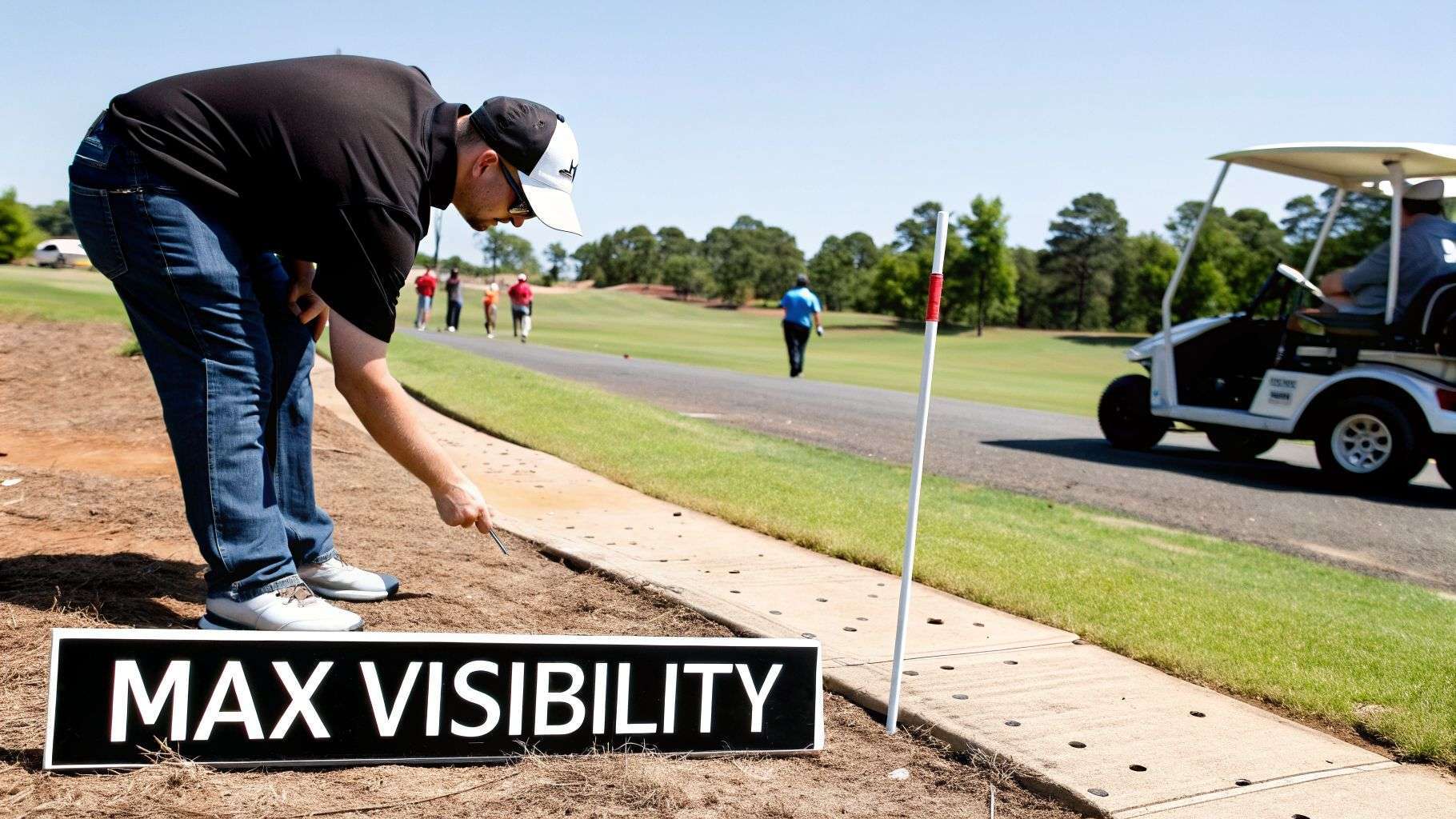
You can have the best-looking sign in the world, but it’s useless if nobody sees it. Getting this right is how you turn a simple piece of plastic into a powerhouse branding tool that makes your sponsors feel seen and appreciated. Think of the golf course as a stage—you want to position your sponsors' logos where the spotlight hits brightest.
The single most valuable piece of real estate for any golf sponsor hole sign is the tee box. It's a natural gathering spot. Players wait for their turn, discuss their shots, and just generally hang around for a few minutes, giving them plenty of time to absorb the sign in front of them. Don't just stick it in the ground randomly; place it directly in their line of sight as they line up their drive.
Key Placement Hotspots
But don't stop at the tee box. To really deliver value for your top-tier sponsors, you need to think about the entire player journey from the parking lot to the 19th hole.
- Near the Clubhouse: This is where the day begins and ends. A large banner at the entrance or signs placed strategically by the bag drop ensures you make a strong first and last impression.
- Practice Areas: The putting green and driving range are buzzing with activity before the tournament starts. It’s a perfect, captive audience for sponsors while golfers are warming up.
- High-Traffic Cart Paths: Look for natural bottlenecks or points along the path with wide, open sightlines where players are likely to slow down.
The real secret is maximizing impression frequency. A golfer who sees the same sponsor's logo at the tee box, again near the green, and a third time on the cart path will walk away feeling like that brand was a major part of the event.
A Simple Guide to Installation
How you install the signs is just as important as where you put them. A crooked or fallen sign just looks sloppy. Always opt for sturdy metal H-stakes; they hold up so much better than flimsy wire, especially if the wind picks up.
Push the stake firmly into the ground until the sign sits about 12-18 inches high. This is the sweet spot—high enough to be easily read from a standing position but low enough that it doesn't become a visual obstruction. For a final pro touch, angle the sign just slightly toward where the players will be standing.
Nailing these small details in placement and installation is what guarantees your sponsors get the visibility they paid for. It reinforces the value of their support and is the number one reason they'll be excited to sign up again next year. For more tips on making your displays last, take a look at our guide on weatherproof outdoor decorations.
From Simple Markers to Strategic Assets
The polished, professional golf sponsor hole signs you see lining the fairways at tournaments these days are a far cry from where they started. It’s easy to see them as just part of the event's decorations, but they have a history that explains exactly why they’re such a powerful tool today. To really appreciate their value, we have to go back in time.
Believe it or not, their story begins not with sponsorship, but with simply not getting lost. Picture some of the earliest golf courses—they were more like untamed fields than the manicured grounds we know. Without any guideposts, players could easily wander off track between holes. The solution was as basic as it gets.
The First Tee Markers
The idea of marking holes seems to have started back in 19th-century France. The first "signs" were nothing more than stones with a hole number carved into them. Their only job was to point players from the green they just finished to the next tee box. That’s it.
As golf took off in the early 20th century, organizers quickly found that fragile stone and wood markers just didn't last. A need for more robust materials became obvious, paving the way for the tougher stuff. You can see some great examples of how far things have progressed by exploring the origins of hole signage. This constant search for durability is what ultimately led us to the high-quality aluminum and PVC signs common today—materials built to withstand years of sun, rain, and the occasional errant golf ball.
From Navigation to Information
Once courses became more standardized, the signs started doing more work. They weren't just simple directionals anymore; they began carrying information that actually helped you play the game.
- Par Ratings: Signs started showing the par for each hole, giving golfers a benchmark to play against.
- Detailed Maps: You began to see simple layouts of the hole, pointing out hazards like bunkers and water, and giving a rough idea of the distance to the pin.
- Yardage Markers: These became crucial for club selection, providing the distance information every serious golfer needs.
This was the real turning point. The signs went from being passive background objects to active tools that were part of the game itself. They became as fundamental to the course as the greens and fairways.
And that’s when the lightbulb went off for tournament organizers. If every single player was already looking at these signs for key information, why not give them something else to look at? Adding a sponsor's logo was the natural next step. That simple idea transformed a humble course marker into the strategic branding asset that now fuels countless charity and corporate golf events.
Common Questions About Golf Sponsor Signs
As you get closer to your tournament date, a handful of questions about sponsor signs always seem to pop up. Let's tackle the big ones head-on so you can make confident decisions and keep your planning on track. Think of this as a quick chat with someone who's been there before.
What Is the Best Size for a Golf Hole Sponsor Sign?
From my experience, the hands-down sweet spot for a standard hole sign is 24×18 inches. It’s the perfect size—big enough to be easily read from a few feet away at the tee box, but not so large that it looks out of place or gets in the way. It just works.
Of course, for your top-tier sponsors who've given a little extra, you'll want to give them a little extra recognition. Upgrading to a 24×30 inches sign or even a small banner is a fantastic way to show their support is valued. It ensures their brand gets noticed and gives them the premium placement they’ve earned.
How Far in Advance Should We Order Signs?
Here's a golden rule: give yourself a cushion. Plan to place your final sign order at least four to six weeks before your event. Trust me, this timeline is your best friend. It gives you plenty of breathing room to chase down sponsor logos, review design proofs without panicking, and account for production and shipping time.
Starting this process early saves you from the headache of rush fees and the anxiety of wondering if your signs will arrive on time. If you're planning on custom shapes or have a massive order, tack on an extra week. You'll be glad you did.
A quick note on materials: While cheaper plastic signs might seem like a good way to save money upfront, they often bend, fade, and get damaged after just one event. Durable aluminum composite signs are weatherproof, UV-resistant, and can be reused for years. This makes them a smarter long-term investment for any annual tournament, delivering a professional look year after year while ultimately lowering your signage costs.
Ready to create signs that make your sponsors proud? American Goose specializes in premium, weather-tough aluminum signs that are designed, printed, and built in the USA to last for years. Explore our durable, high-quality options today at https://theamericangoose.com.